Designing a 15-Minute Daily Tidy Routine: Studio Notes on Question, Process, Review
Problem
Question: How can a busy household maintain visible order without long cleaning sessions or complex systems?
Process (studio notes): Observe the times and places where clutter accumulates daily: entryways, kitchen counters, living-room surfaces, and the central desk. Instead of planning a large weekly purge, design a short, predictable routine that addresses the most frequent messes before they compound.
Review: The goal is not perfection but preventing friction—lost keys, overflowing countertops, or a stressed-looking living room. A consistent 15-minute routine reduces decision fatigue and keeps shared spaces usable.
Principles
Question: What organizing ideas make a short routine both effective and sustainable?
- Limit scope: Target high-impact zones rather than every room each day.
- Time-box: Use a timer. Fifteen minutes creates a manageable commitment and encourages focus.
- Containment over perfection: Aim to corral items into defined homes (a bowl, basket, drawer) so surfaces read as tidy quickly.
- One-touch rules: When possible, pick something up and put it where it belongs immediately rather than setting it down to sort later.
- Visibility and access: Keep frequently used items where they’re easy to return; hide infrequently used items to reduce visual clutter.
- Shared expectations: Make the routine predictable for everyone in the household—same time, same zones, same basic tasks.
Review: These principles are practical guardrails. They keep the routine short and predictable and reduce the cognitive overhead of deciding what to do each day.
Examples (Room-by-Room Process)
Question: What does a 15-minute session look like in practice?
Process: Below are three 5-minute modules you can mix and match, or run sequentially.
Module A: Entryway (5 minutes)
- Start timer for 5 minutes.
- Collect shoes, jackets, mail, and lingering bags. Use a basket for items that belong elsewhere.
- Wipe surface of console or hall table with a microfiber cloth if visibly dusty.
- Place keys and wallet in a designated tray.
- Move basket items to their rooms as you pass through or drop them in a staging spot for a quick second pass.
Module B: Kitchen High-Impact Sweep (5 minutes)
- Start timer for 5 minutes.
- Load or rinse dishes; place them in the dishwasher or stack neatly to dry.
- Clear countertops of unused items; corral small appliances to one side or into a cabinet.
- Wipe food prep areas with a damp cloth and quick-dry towel.
- Empty trash or recycling if nearly full.
Module C: Living Room & Quick Sort (5 minutes)
- Start timer for 5 minutes.
- Gather stray items—magazines, kids’ toys, cups—and sort into keep, relocate, donate piles as appropriate.
- Fluff cushions, fold a throw, and stack remote controls in a small tray.
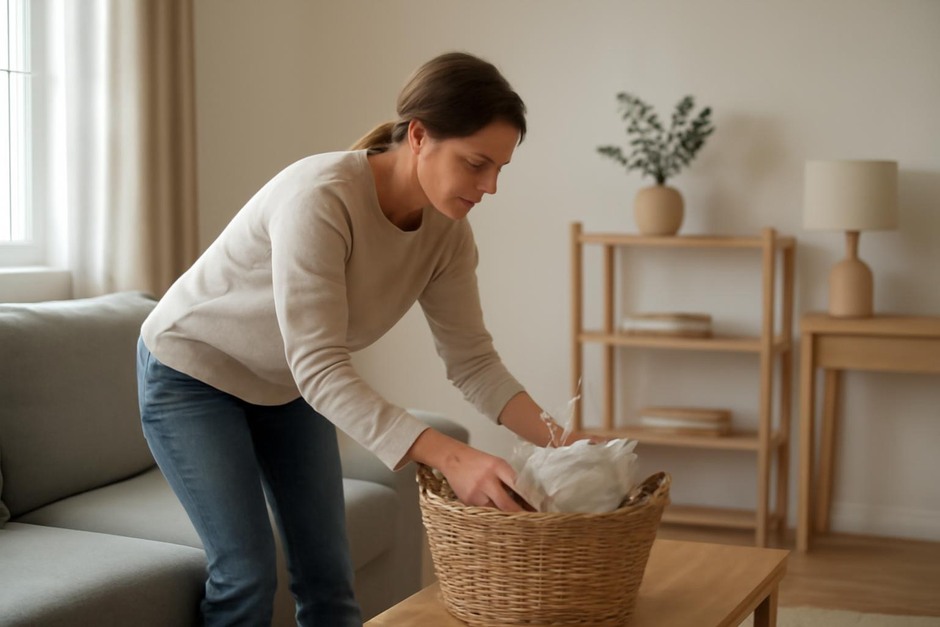
- Use a basket to collect items that belong elsewhere and deposit them on your way to those rooms.
Review: Modules can be adapted—swap bathroom or bedroom as needed. The key is consistent, short bursts targeting high-traffic areas.
Practice Checklist (Concise)
Question: What should you actually do when the timer goes off?
- Set a daily time (morning or evening) and commit to 15 minutes.
- Choose three 5-minute modules or one focused 15-minute zone.
- Use a basket or tray for corralled items that need relocation.
- Follow the one-touch rule: return items to their home immediately when possible.
- Close or hide infrequently used items to reduce visual noise.
- Quickly wipe the most-used surfaces with a microfiber cloth.
- End with a 30-second review: could anything be simplified or moved to prevent future clutter?
Review: Treat this checklist as an experiment. Adjust modules, timing, and storage solutions until the routine fits your household rhythms. The studio approach—question, process, review—helps you iterate without overhauling everything at once.